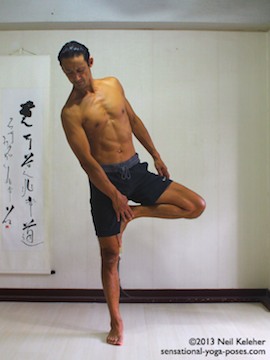
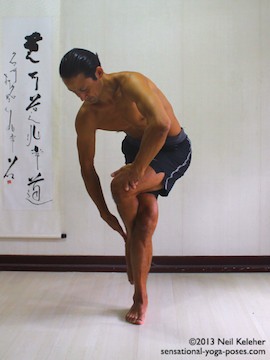
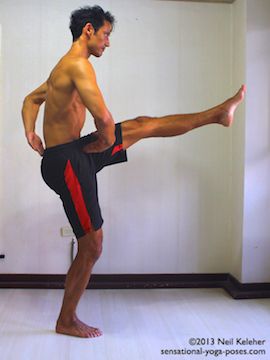
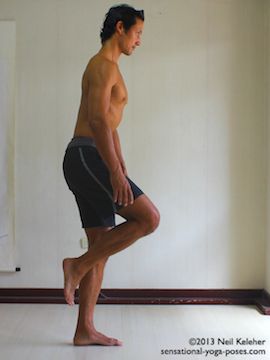
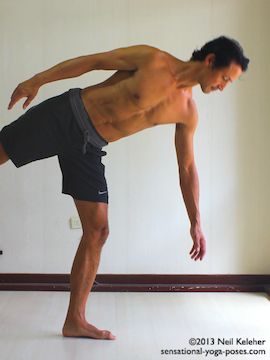
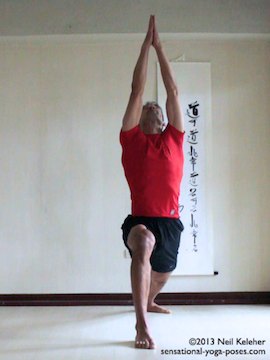
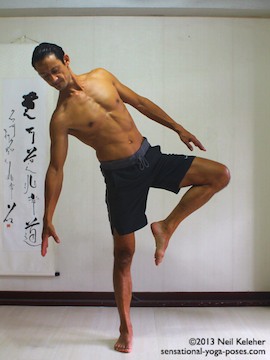
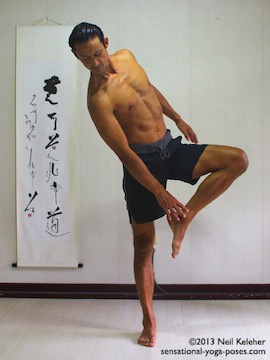
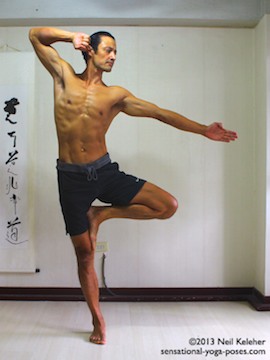
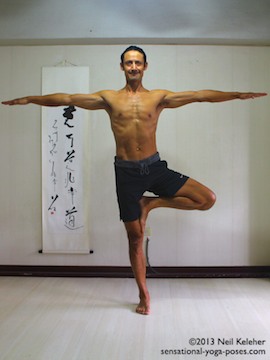
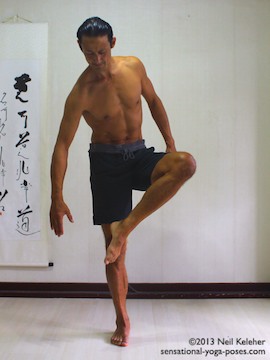
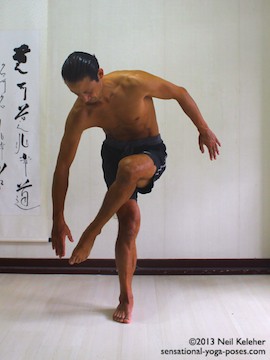
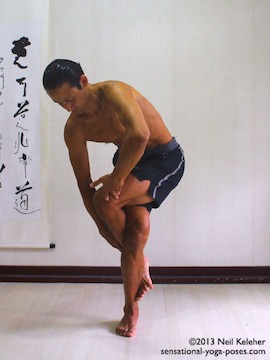
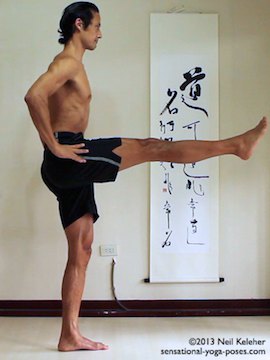
One of my favorite balancing on one foot exercises (currently) could be used as a preparation for the hands free version of utthitta hasta padangusthasana.
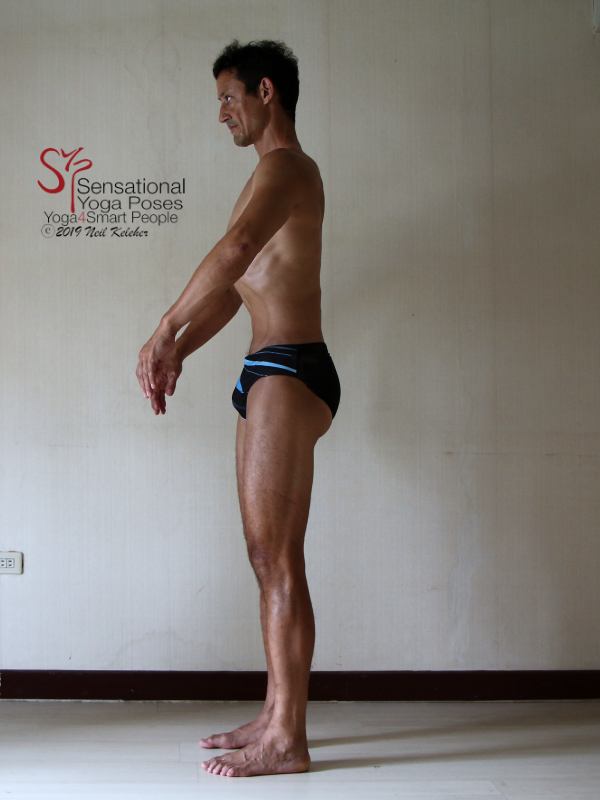
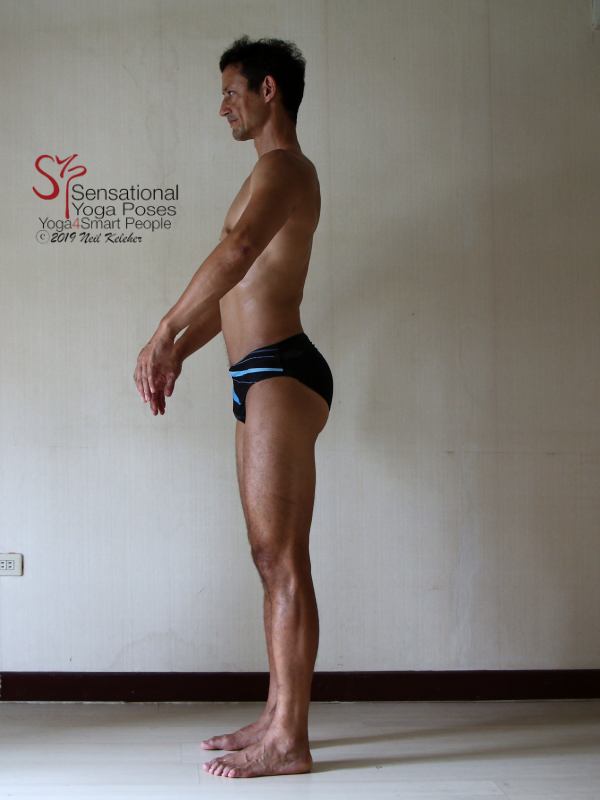
The starting point is to stand on both legs with knees slightly bent. Practice lifting the pubic bone and then relaxing.
- When lifting the pubic bone, the tail bone will move down so that the pelvis will tilt backwards. The lumbar spine will flatten.
- When returning to the start position the pelvis will tilt forwards. The lumbar spine "unflattens" or resumes its normal curvature.
Once you are comfortable with tilting your pelvis backwards and forwards, work at initiating the pubic bone lift using your lower belly.
If you cover the part of your belly between your belly button and pubic bone with both hands, one hand on top of the other, the lower hand will cover what I refer to as the "lower belly."
Slowly pull your lower belly in and at the same time pull your pubic bone up. Relax and repeat until you can do the action smoothly.
Next add a chest lift. Pull your lower belly in, pull your pubic bone up and slowly lift and expand your ribcage.
Use these actions to make your spine feel long.
Then relax and repeat the actions.
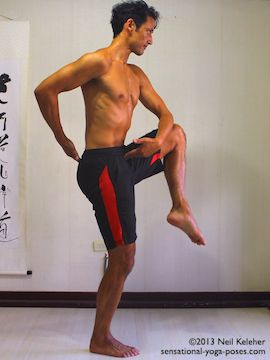
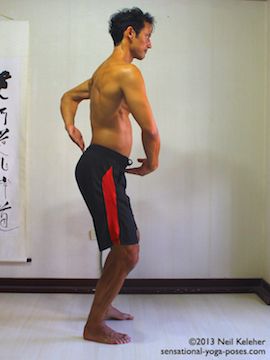
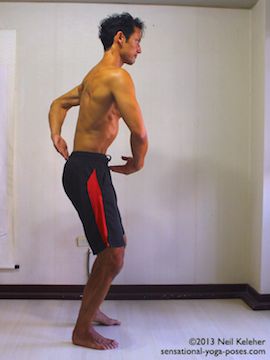
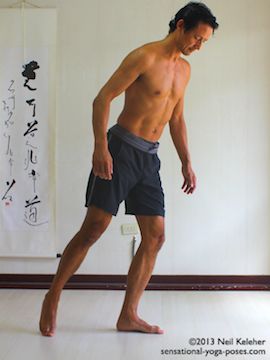
Next stand on one leg with the foot slightly turned out and the knee bent. Pull the lower belly in. Pull the pubic bone up. Lift and expand your ribcage, then lift the knee of the non-weighted leg. Lower the leg. Shift back to center and then repeat the action on the other side.
Repeat both sides a few times. Then after the knee raise try to straighten the lifted knee while keeping your lower belly pulled in.
You may find it helps if you reach your arms to the sides. (not shown.)
I'd suggest holding only briefly. Then gradually work at extending the time you spend with the knee straight.
In addition you can also work at doing the exercise with knee straight and supporting foot pointing straight ahead.
A variation of this exercise is to focus on activating the inner thigh instead of the outer thigh. Here again the counter acting muscles will activate where necessary to keep the pelvis level.
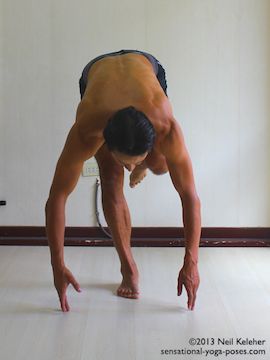
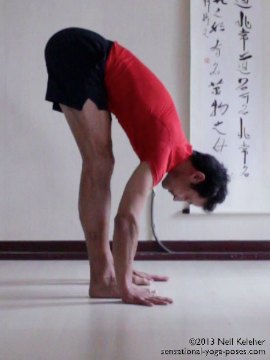
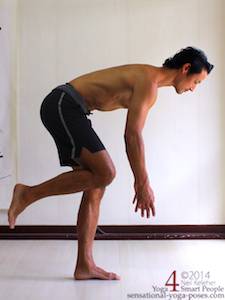
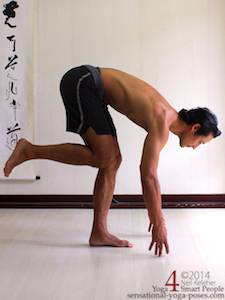
Once you've developed the ability to keep the outer thigh and/or inner thigh active, focus instead on bending forwards and standing slowly and smoothly. If you find that you are unstable then deliberately activate outer thigh or inner thigh, or deliberately activate foot and ankle to stabilize it.
See if you can use the least effort necessary to create stability. Then continue to focus on slowly bending forwards and slowly standing.
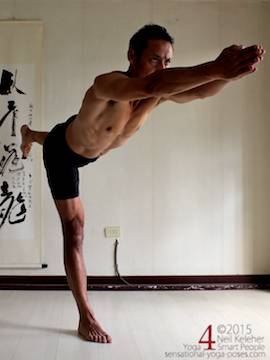
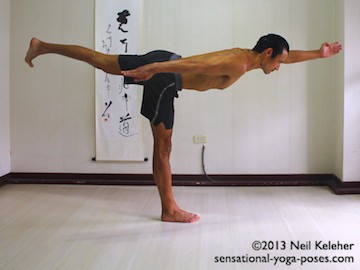
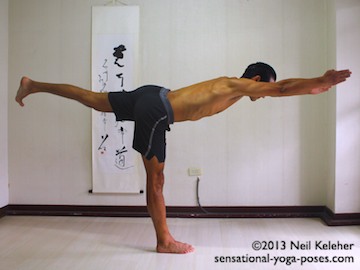
The previous exercise is relatively easy to turn into warrior 3.
Start with your standing leg pointing straight ahead. You can keep the standing knee slightly bent or keep it straight. Pull the other knee forwards and slowly bend forwards.
When you are as low as you can go reach the free leg back. Make your pelvis level from left to right and point the lifted knee down. Slowly bent your spine backwards and reach your chest forwards. At the same time reach your arms back.
You can hold this position for any number of breaths. Then if you like reach your arms forwards. I'd suggest reaching one arm forwards at a time, reaching each arm slowly forwards with elbows straight. Then see if you can bring your arms together in front of you.
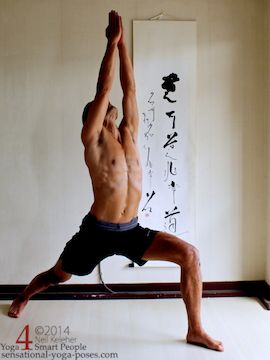
If you have trouble getting your hands together over your head, try practicing the action while in warrior 1 (below.)
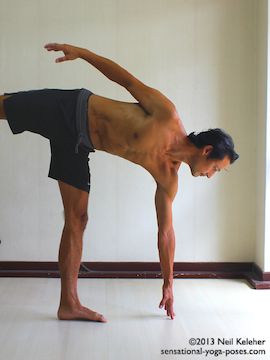
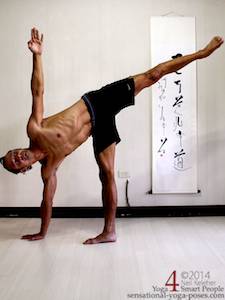
You can do a similiar balancing on one foot exercise moving in and out of half moon pose.
Stand with one foot turned out to the side 90 degrees. Shift your weight onto that foot.
Turn your pelvis square to the front. Then activate the outer thigh and hip muscles of the standing leg. Activate foot and ankle.
Then reach towards the floor with the bottom hand while lifting the free leg. (You can also reach the free arm straight up or keep it relaxed as in the pictures above).
The free leg knee can be bent or straight. The focus in this exercise is on keeping the standing leg stable.
Note if you can't reach the floor just go down as far as possible while maintaining control and then slowly stand back up. With practice you may find that you can gradually go lower.
As with the previous exercise, switch sides after each repetition.
Also, do the same exercise while focusing on keeping the inner thigh active. But keep the pelvis facing the front so that the side of the pelvis that is uppermost is stacked over the side that is lowermost (or as close to stacked as possible.)
If you can hold half moon pose, try looking up.
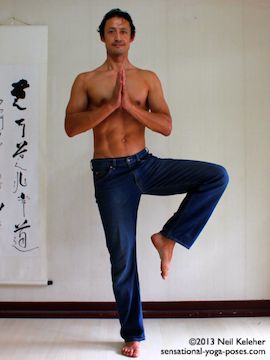
You can do an "imitation yoga tree pose" balancing on one foot posture.
Instead of resting the foot against the inner thigh, keep it away from the inner thigh.
Stabilize the standing leg. While you can focus on moving in and out of this pose, I'd suggest just holding it for five or more breaths.
The actions that you practice when balancing on one foot may be helpful in standing yoga poses like standing forward bend, chair pose, triangle twist, warrior 1 and more.
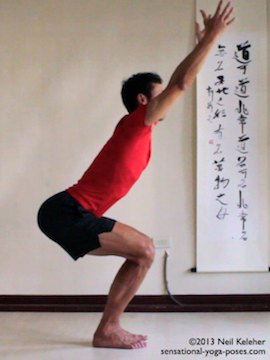
In chair pose squeeze the outer thighs and then squeeze the inner thighs so that your knees continue to point in the same direction as your toes.
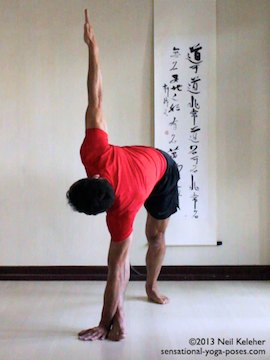
In triangle twist and parsvottanasana. You can experiment with just activating the outer thighs or activate both outer thigh and inner thighs. Likewise in standing forward bend.
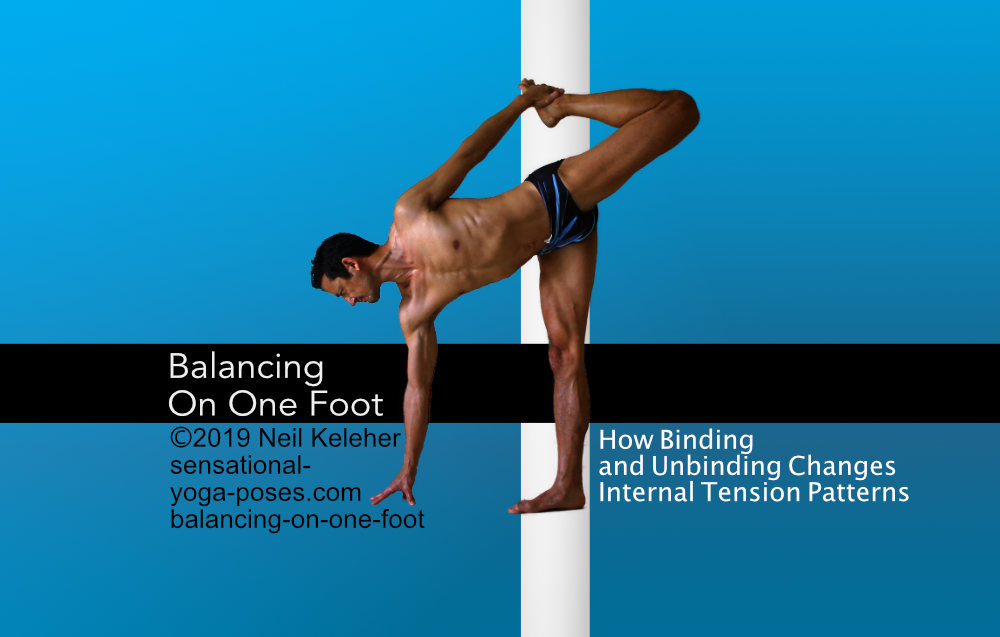
Binding yoga poses while balancing on one foot include: tree pose, eagle yoga pose, utthitta hasta padangusthasana variations 1 and 2, half bound lotus forward bend and "dancer" yoga pose.
All of these balancing on one leg yoga positions are positions where one foot presses against the other leg or a hand grabs the foot or ankle of the lifted leg.
As a prelude to tree pose you can stand lean to the side while standing on one leg with the opposite knee lifted.
If standing on the right leg, bend to the right and reach the left knee to the left. Use leg muscle power to pull the heel towards the inner thigh.
Hold for a few moments then to move into tree pose grab the foot with one hand, bring it high onto the inner thigh, smoothly press your foot against your inner thigh, let go and slowly stand upright. Press your foot into your inner thigh.
Note that in tree pose the leg presses against the inner thigh. Like in binding yoga poses this changes the way that your body works. As such, if you press your foot suddenly into your thigh you may find that it is difficult to maintain balance.
If you first just touch the leg to the inner thigh (using balance basic parlance, make the foot "empty") then slowly and smoothly press it into the thigh (making it "full" or partially full.)
As you press the foot into the thigh you can resist and press the thigh against the foot. As you do so stay aware of your standing foot so that it is easier to stay balanced.
You can reach your arms out to the side or put them in prayer position (not shown.) Other arm positions are also possible.
For style points you can reach your bent leg arm down and to the side. Pull the other elbow up and to the side. You can look down your arm as if aiming a bow.
If you are doing this "bow pulling" action after grabbing the lifted foot to position it, then I'd suggest grabbing the foot with the opposite hand. The action of then bringing the hand to the ear and straightening the other arm can then be made smoother.
Check out tree pose for more options.
You don't have to bend to the opposite side prior to going into tree pose. However one reason that I tried it was as a way to practice activating the abs on the standing leg side.
Activating the abs may then make it easier to bring the leg up since the abs help to stabilize the ribcage which in turn may make it easier to lift the opposite hip.
Also, standing up straight while balancing on one leg requires awareness and control.
Can you stand up slowly and smoothly? Can you stay balanced while doing so? To make staying balanced on one leg easier, focus on feeling the foot that you are balancing on. Notice pressure changes and respond to those changes so that you stay balanced.
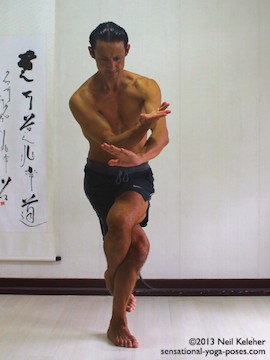
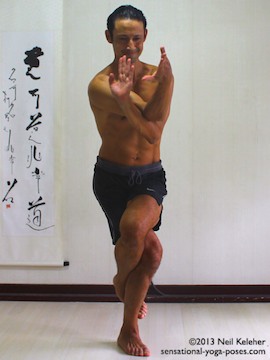
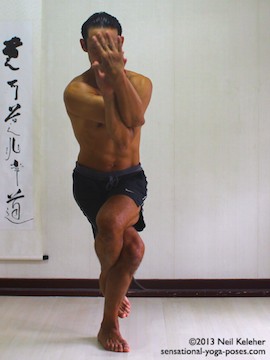
Eagle yoga pose is another "self contacting" or if you like "binding" type of balancing on one leg yoga pose. The legs (and arms) wrap around each other, and because of this they change the configuration of the body making it work slightly differently (like switching between operating systems on your mac book pro.)
A similiar style of entry as used in tree pose could be used for eagle.
Standing on the right foot, lean to the right and bring the left knee forwards and up with the ankle in front of the thigh. Then turn the pelvis to the right to increase the cross of the legs.
In this instance again, you can use your abs to bend to the side which in turn may help to lift the opposite hip making it easier to wrap the legs.
To bring the ankles closer together, you could try engaging the abs to bend your spine forwards and at the same time bring the left ankle closer to the right.
Use your left hand on the knee to push it further right. Use the right hand on the left ankle to push it behind the foot.
If you can already easily do eagle hands then once your ankles are crossed, move the left forearm slightly right keeping the elbow bent. Poke the right arm up inside the left elbow with forearm rotated externally.
Then with elbows crossed (right on top of left) bring the right hand back to hook the left hand.
Read more about binding the arms in eagle pose in eagle pose arms.
Here again because the legs are touching it can interfere with your perception of your balancing leg. Focus on feeling the foot.
Focus on making the right leg (the standing leg) strong first. Then gradually engage the "crossing" foot. This latter action can be as simple as pressing the inside edge of the left foot against the ankle of the right foot. You may find that your left hip lifts and rolls forwards slightly as a result.
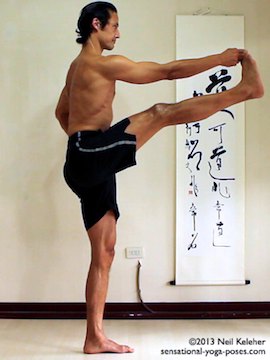
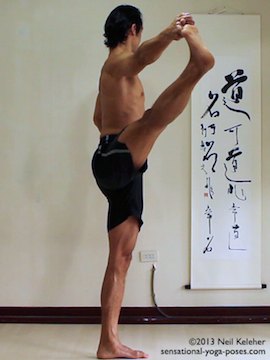
In the "pro" version of utthitta hasta padangusthasana (or "Hand to Big Toe Pose") you grab the big toe with the thumb and first two fingers.
An option is to grab onto the side of your foot.
Initially, the leg is to the front, then you move it to the side, then you move it back to the front. After moving it to the front, you can bend forwards and "kiss" your knee. Then you let go and hold the leg to the front using just the strength of your leg muscles.
To get used to how holding on to the toe (or foot) can affect your balance, grab on to a knee first and push your knee forwards while pulling back with your hands.
Push smoothly and slowly rather than suddenly.
When doing the pose with your knee straight, work at doing the same thing, push out with your leg and pull back with our arm. You'll have to stiffen your foot and your big toe.
When letting go, try to create the same feeling i.e. push out and pull back at the same time using the muscles of your leg.
Read more in utthitta hasta padangusthasana.
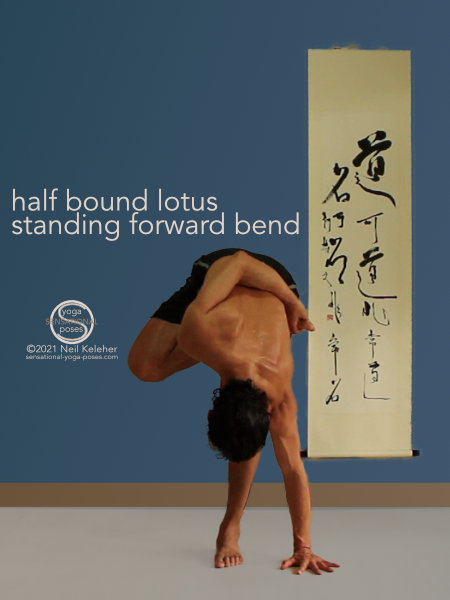
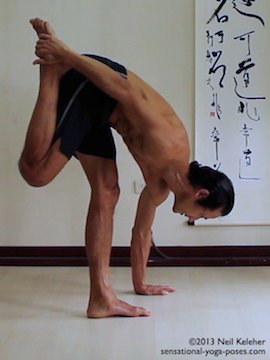
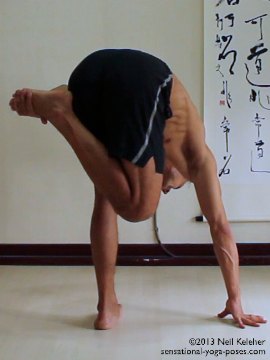
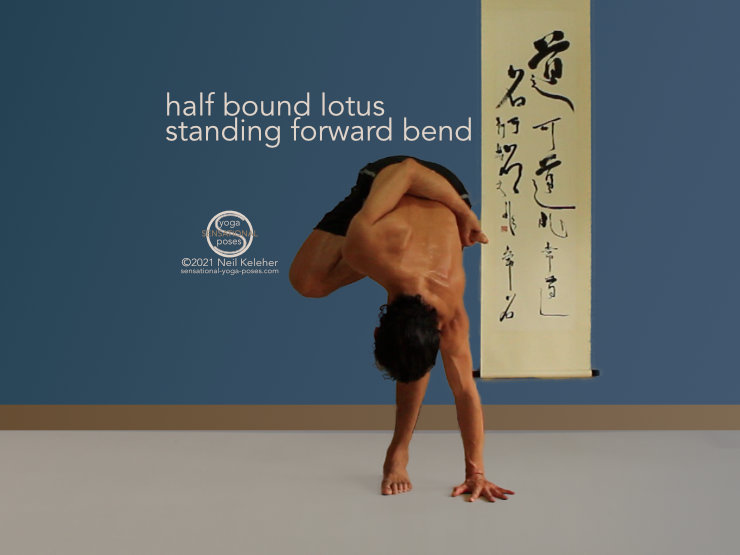
For bound lotus balancing on one foot, I'd suggest a substitute pose first. Doing a quad stretch and grabbing the foot with the same hand. Keep the knee down and bend forwards and touch the other hand to the floor. Work towards doing the pose while grabbing the foot with the opposite hand.
Try to rotate the thigh so that the foot is behind the opposite buttock, close to the grabbing hand. This is about as close as you can get to the half bound lotus pose without actually being in it.
A variation of the modification is to lift the knee while bend forwards so that the pose better resembles the splits but while balancing on the front foot.
As with the previous pose you can play with applying tension prior to bending forwards or after bending forwards. Feel like you are trying to pull your foot out of your hand. You can also make your leg feel like you are trying to straighten the knee. Again, do this slowly so that it is easier to stay balanced.
Read more about ardha baddha padmottanasana (pictured below).
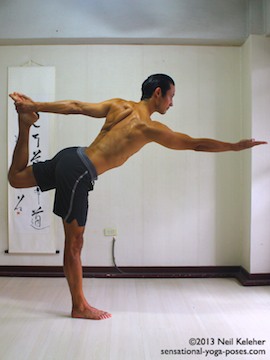
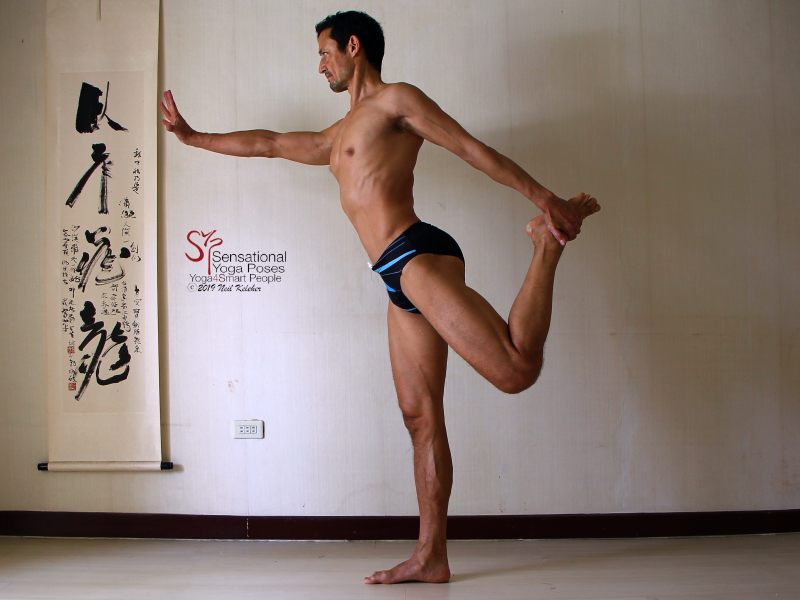
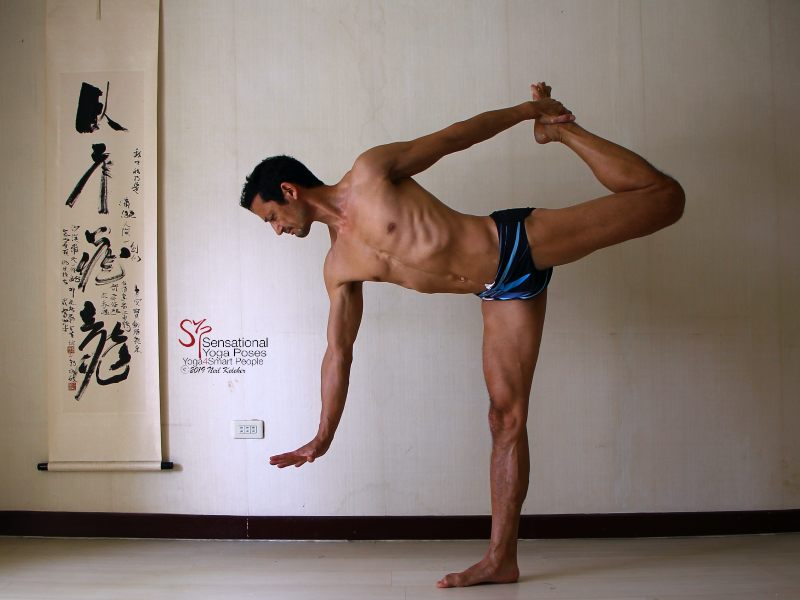
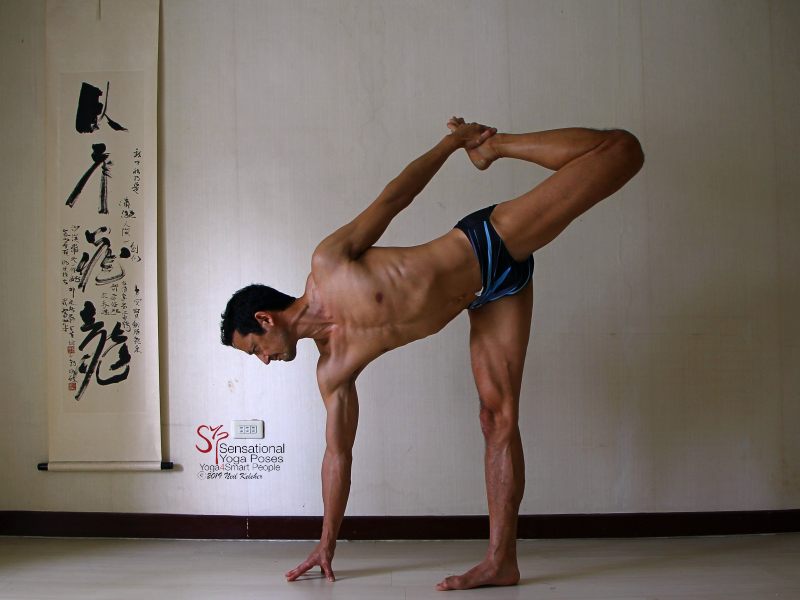
For dancer (or bow pose on one foot) I used to teach it as follows. Grab the foot, Bend the spine backwards. Then tilt the pelvis forwards while keeping the spine bent backwards. Then add tension to the leg and arm by reaching the foot away from the hip.
One option is to reach the free hand forwards. The option I preferred is to touch the free hand to the floor.
Focus on pulling upwards on the inner thigh of the foot that you are grabbing. It's like you are trying to use your inner thigh to internally rotate the leg.
See if you can keep your pelvis level from left to right as you do so.
And see if you can stand with control when coming out of the pose. To do so make sure you shift all of your weight onto your foot (away from your hand) before trying to stand up.
Published: 2011 04 04
Updated: 2023 03 22